Your cart is currently empty

Wayne Wetherall – Founder of Kokoda Spirit & Wild Spirit Adventures

Wayne Wetheral

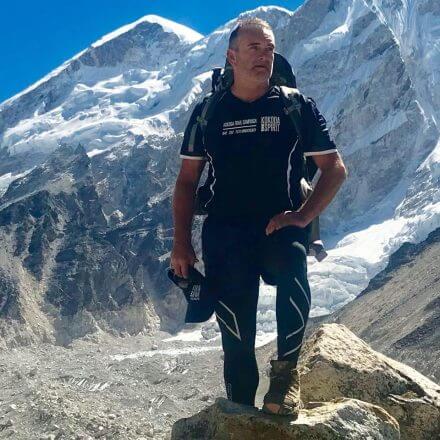
Meet Wayne Wetherall, Founder of Kokoda Spirit, Kokoda expedition leader, and one of Australia’s most experienced guides, with more than 100 Kokoda crossings since 2004.

Wayne Wetherall is the Founder of Kokoda Spirit and Wild Spirit Adventures, and one of Australia’s most experienced Kokoda expedition leaders.

Since first trekking the Kokoda Track in 2004, Wayne Wetherall has completed more than 100 crossings of Kokoda — covering more than 10,000 kilometres on the Track — and led more than 130 expeditions across Papua New Guinea, Borneo, Nepal, Kilimanjaro and other challenging environments.

Over more than two decades, he has built a strong reputation for professional leadership, authentic historical storytelling, and designing meaningful expeditions that challenge, inspire and transform people.

Wayne’s connection to Kokoda began with a moment that changed the course of his life. On his first trek across the Track, he was deeply moved by the story of the Australian soldiers who fought there in 1942, the extraordinary resilience they displayed, and the service and sacrifice of the Papua New Guinean people, including the Fuzzy Wuzzy Angels. From that moment, Kokoda became far more than an adventure destination. It became a purpose.

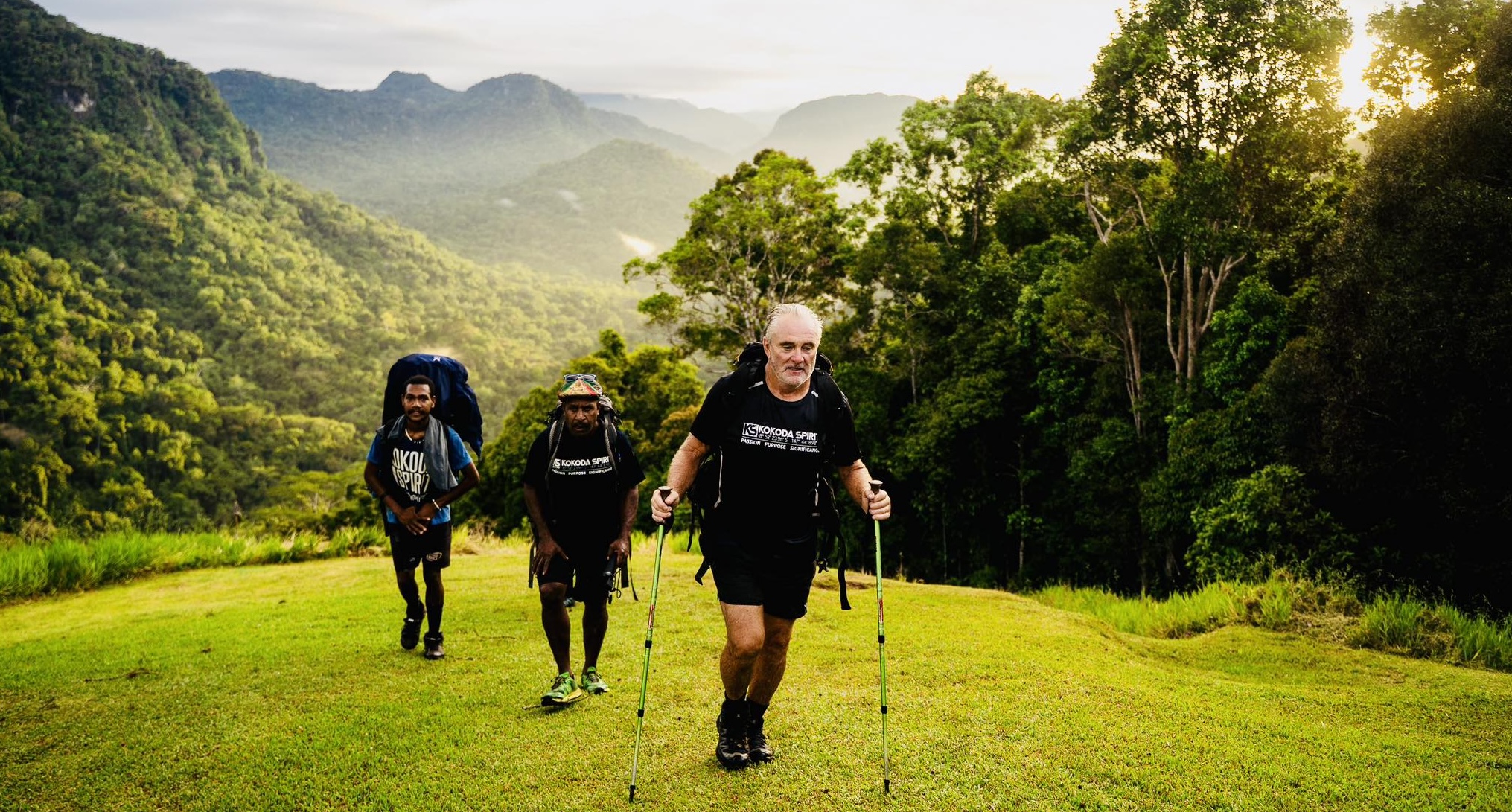
That purpose led Wayne Wetherall to build Kokoda Spirit from the ground up in 2004. Under his leadership, Kokoda Spirit has safely escorted thousands of trekkers across the Kokoda Track and earned a reputation as one of the most respected and professional Kokoda trekking companies operating in both Australia and Papua New Guinea. Wayne has always believed Kokoda should be delivered with authenticity, professionalism, safety, and deep respect for the history, the land, and the people who call it home.

Wayne Wetherall and Kokoda Spirit specialise in treks for elite teams, defence organisations, schools, charities, leadership groups and individuals. Over the years, Wayne has led or facilitated expeditions for the Australian Defence Force, the Australian War College, the 39th Battalion, the Australian Army Adelaide University Regiment, current serving Brigadiers and Colonels, and members of the New Zealand Defence Force. He has also worked with high-performance sporting teams and athletes including the Sydney Roosters, Newcastle Knights, Paul “The Chief” Harragon, Kurt Fearnley, Michael Milton and Don Elgin.

His leadership style is one of the reasons Wayne Wetherall is so highly regarded. He is known for his calmness under pressure, practical decision-making, strong field presence, and ability to connect with people from all walks of life. Whether leading current-serving military personnel, elite athletes, school groups or first-time trekkers, Wayne brings a rare combination of operational experience, emotional intelligence, resilience and perspective.

Wayne is also respected for his deep knowledge of the Kokoda campaign. His battlefield briefings are informed not only by extensive research, but by years of walking the ground, listening to the stories of Kokoda veterans, and understanding the significance of place. His commitment to preserving and honouring Kokoda’s history has been central to the way he leads every trek.

Beyond Kokoda, Wayne Wetherall has led expeditions to Everest Base Camp, Mt Kilimanjaro, Mt Kinabalu, the Sandakan Death March in Borneo, the Larapinta Trail, the Overland Track, Vietnam, Cambodia and other remote environments. He also designs and delivers handcrafted itineraries and custom adventure programs for foundations, charities, sporting groups and leadership teams in Australia and overseas. Through Wild Spirit Adventures, he continues to create experiences that combine challenge, history, perspective and personal growth.

A strong part of Wayne’s philosophy is that great expeditions should also create real benefits for local people. Through Kokoda Spirit, he has long supported fair conditions, better training and stronger opportunities for PNG guides, porters and communities along the Kokoda Track. He is passionate about responsible trekking, sustainable tourism, and ensuring the people of Papua New Guinea are respected, supported and included in the future of Kokoda.

For Wayne Wetherall, Kokoda has never been just about the number of crossings, the accolades, or the profile of the people he has guided. At its heart, Kokoda is about people, stories, endurance, sacrifice, mateship and service. It is about helping others discover what they are capable of when life gets steep, hard and uncertain. That is what has kept bringing him back to the Track for more than two decades.

Today, Wayne Wetherall continues to lead Kokoda through Kokoda Spirit with the same passion that first took hold in 2004 — to honour the story, respect the land, support the people, and help others experience the spirit of Kokoda in a way that is authentic, safe and unforgettable.


Experience and leadership

Over the years Wayne has guided a wide range of groups across Kokoda including:

• schools and youth groups

• corporate leadership teams

• sporting organisations

• veterans and military groups.

His leadership style focuses on resilience, teamwork and personal growth — lessons drawn directly from the experiences of the soldiers who fought along the Kokoda Track during the Second World War.


Sharing the Kokoda story

For Wayne, Kokoda is more than a physical trek.

It is a place where history, challenge and reflection come together.

Many trekkers arrive unsure of what they are capable of. But step by step through the mud, the climbs and the jungle, they discover a strength they did not know they possessed.

That moment — when ordinary people realise they are capable of extraordinary things — is what makes Kokoda such a powerful journey.

Founder's Reflection - Wayne Wetherall Kokoda Spirit

The Final Walk

There will come a day when I walk the Kokoda Track for the final time.

On that day it won’t be about recognition, achievements, people’s opinions of me or the number of expeditions led. Those things will not matter.

What will matter is reaching the end of the track, walking beneath the final arch, and then turning around to look back across the mountains and valleys that make up Kokoda.

In that quiet moment I imagine simply nodding to the track itself — and to the spirit of the young Australians who fought there in 1942. Ordinary young men who faced extraordinary hardship and held the line against a determined enemy.

That nod would be my way of saying something simple.

That I tried.

I tried to honour their story.
I tried to help others understand the courage, resilience, and mateship that defined the Kokoda campaign.
And I tried to ensure that the spirit of Kokoda continued to live on through the people who walked that track after them.

 
The Moment That Changed Everything

My connection with Kokoda began in 2004 when I first trekked the track myself.

Halfway across the mountains I had a moment that changed me — an epiphany that has stayed with me ever since.

I remember asking myself a simple but powerful question:

Why didn’t I know this story?

Why had I never been taught about the young Australian soldiers who held back a determined enemy intent on changing our nation’s future?

Why had I never truly understood the extraordinary service of the Papua New Guinean people — the famous Fuzzy Wuzzy Angels — who carried, cared for, and saved so many Australian lives?

Standing there on the track, surrounded by the mountains and the history of that place, I realised Kokoda was more than history.

It was a story of courage, sacrifice, service and humanity that deserved to be remembered and shared.

From that moment on, Kokoda became far more than a place to me.

It became my purpose.
My passion.
And a source of deep personal significance.

 
What Kokoda Teaches Us

Over the years, Kokoda has shaped many of the people who have walked it — and it has shaped me as well.

Like anyone who has lived a full life, I have made mistakes along the way. Those experiences, and the lessons learned from them, have helped me grow. Kokoda itself has been part of that journey — teaching humility, perspective, resilience, and the importance of standing up again after adversity.

In many ways, the track changes all of us who walk it.

For more than two decades it has been my privilege to guide people across Kokoda and watch them discover something deeper about themselves along the way.

Many arrive unsure of what they are capable of.

But step by step, through the mud, the climbs, the rain, and the history that surrounds them, they discover a strength they didn’t know they possessed. By the end of the journey many realise they are capable of far more than they once believed.

That moment of realisation — that shift in perspective — is what makes Kokoda such a powerful place.

It reminds us of the qualities that define the best of the Australian character:

Resilience.
Endurance.
Sacrifice.
Service.
Mateship.
Humility.
Courage in the face of adversity.

These were the qualities shown by the diggers who fought there, and they are the same qualities that people often rediscover within themselves when they walk the track.

Those lessons matter.

Because Kokoda is more than a physical journey.

It is a reminder of what ordinary people can achieve when they refuse to give up and when they stand beside their mates.

 
A Commitment

For many people who walk the track, Kokoda becomes a moment in their lives they will never forget.

For me, it became something more.

It became a lifetime of walking those mountains, sharing the story, and witnessing the quiet transformation that takes place in people who discover what they are truly capable of.

The words spoken at Kokoda are not just tradition.

They are a commitment.

A promise that the courage, sacrifice, and spirit of those who served there will never be forgotten.

Lest we forget.


“Wayne Wetherall has trekked the Kokoda Track more than 100 times and has led expeditions across Kokoda, Nepal, Borneo, Vietnam, Cambodia, Australia’s Northern Territory and Kilimanjaro for more than two decades.”